Short-Term Rental Insurance: What Airbnb Investors Actually Need (2026 Guide)
Standard homeowner policies don't cover Airbnbs. Learn what short-term rental insurance investors actually need to protect their property, liability, and income.
One of the most dangerous misconceptions in real estate investing is that a standard homeowner's insurance policy will cover a short-term rental (STR). It will not.
The moment you list a property on Airbnb or Vrbo and accept money for a stay, your property transitions from a personal residence to a commercial enterprise. If a guest accidentally burns down the kitchen, or slips on an icy driveway and sues you for $500,000, a standard homeowner's policy will almost certainly deny the claim due to the "business activity" exclusion buried in the fine print.
Relying on platform protections like Airbnb's AirCover is equally risky. AirCover is a host damage protection program, not a primary insurance policy. It has significant gaps in coverage and provides zero protection for off-platform bookings. For serious investors, proper commercial short-term rental insurance is not optional—it is a foundational pillar of asset protection and a prerequisite for securing DSCR financing.
Key Takeaways:
- Standard homeowner (HO-3) and landlord (DP-3) policies explicitly exclude coverage for business activities, including short-term rentals.
- AirCover and Vrbo's liability protections are secondary gap coverages, not primary insurance policies.
- A proper STR policy must cover three core areas: Commercial Property Damage, Commercial Liability, and Loss of Business Income.
- Insurance costs vary wildly by market and must be factored into your initial underwriting and DSCR calculations before making an offer.
- DSCR lenders require proof of adequate commercial STR insurance before closing.
Before you close, make sure your investment is actually insurable.
STR Insurance Advisors helps investors look beyond standard homeowner coverage and evaluate policies designed for short-term rental use, guest liability, property risk, and income protection.
Consult STR Insurance AdvisorsWhy Standard Insurance Fails STR Investors
Insurance policies are priced based on risk. A family living in a home full-time presents a known, predictable risk profile to an insurance company. A home that sees 50 different groups of strangers cycle through it every year—strangers who are on vacation, unfamiliar with the property, and potentially hosting large gatherings—presents a radically different, commercial-level risk.
Because of this fundamental difference, standard homeowner (HO-3) or landlord (DP-3) policies explicitly exclude coverage for business activities. The exclusion language typically reads something like: "We do not cover bodily injury or property damage arising out of or in connection with a business engaged in by an insured."
If you file a claim for damage caused by a short-term renter, the insurance company will investigate. When they discover the property is an active Airbnb, they will deny the claim and likely drop your coverage entirely—leaving you uninsured and potentially liable for any outstanding claims. To be properly protected, you need a commercial package policy designed specifically for short-term rental operations.
The Problem with Relying on AirCover
Many new hosts assume that Airbnb's AirCover or Vrbo's $1M Liability Insurance is all they need. While these platform protections are valuable as a supplemental layer, they are not true insurance policies and should never be your primary coverage.
Critical gaps in platform protection:
- Off-Platform Bookings: If you accept a direct booking through your own website or a booking through another channel (Booking.com, Furnished Finder, etc.), AirCover provides zero protection.
- Exclusions: Platform protections often exclude wear and tear, damage from major weather events, damage to cash or valuables, and damage caused by guest pets.
- Loss of Income: If a guest damages your property so severely that you have to cancel the next three months of bookings to repair it, AirCover will not reimburse you for that lost revenue. This is a catastrophic gap for investors relying on rental income to pay the mortgage.
- The Resolution Process: You must navigate the platform's internal resolution center, which often requires you to attempt to collect money from the guest first before the platform steps in. This process can take weeks and frequently results in partial compensation.
The 3 Pillars of Proper STR Insurance
A robust commercial STR policy is built on three essential pillars of coverage. When evaluating any policy, verify that all three are present and adequately funded.
Pillar 1: Commercial Property Coverage
This protects the physical structure of the home and your contents (furniture, appliances, electronics, linens) from covered perils like fire, wind, hail, and theft. Crucially, a good STR policy will cover damage caused specifically by guests—without the business activity exclusion. Ensure the coverage amount reflects the full replacement cost of the home, not the market value.
Pillar 2: Commercial Liability Coverage
This is the most critical protection for investors. If a guest is injured on your property—whether they slip by the pool, trip on the stairs, or fall from a deck—you can be sued for medical expenses, lost wages, and pain and suffering. You should carry a minimum of $1,000,000 in liability coverage, though $2,000,000 is recommended for properties with pools, hot tubs, or other amenity risks.
Pillar 3: Loss of Business Income Coverage
If a fire destroys the kitchen, property damage coverage pays to rebuild it. But Loss of Business Income coverage replaces the revenue you would have earned during the repair period. For an investor using a DSCR loan, this coverage is the difference between staying current on your mortgage and defaulting.
Insurance Risk Grade by Market Type
Insurance costs are highly localized and driven by environmental and geographic risk factors. When underwriting a property, use this guide to calibrate your insurance budget.
| Market Type | Primary Risk | Insurance Grade | Est. Annual Premium |
|---|---|---|---|
| Coastal Oceanfront (OBX, FL) | Hurricane, Flood | High | $6,000 - $15,000+ |
| Coastal Non-Oceanfront | Wind, Flood | Moderate-High | $3,500 - $8,000 |
| Mountain (Smokies, CO) | Wildfire | Moderate | $2,500 - $5,000 |
| Urban/Suburban (Midwest) | General Perils | Low-Moderate | $1,500 - $3,500 |
| Desert Southwest (AZ, NV) | Fire, Heat Damage | Moderate | $2,000 - $4,500 |
Note: These are general estimates. Actual premiums vary significantly based on property age, construction type, coverage limits, and carrier availability. Always obtain a property-specific quote.
Investor Lens: How Insurance Impacts Your Deal
When analyzing a potential STR investment, insurance is a major line item that can make or break the deal's profitability. It must be treated as a real, verified cost—not an estimate.
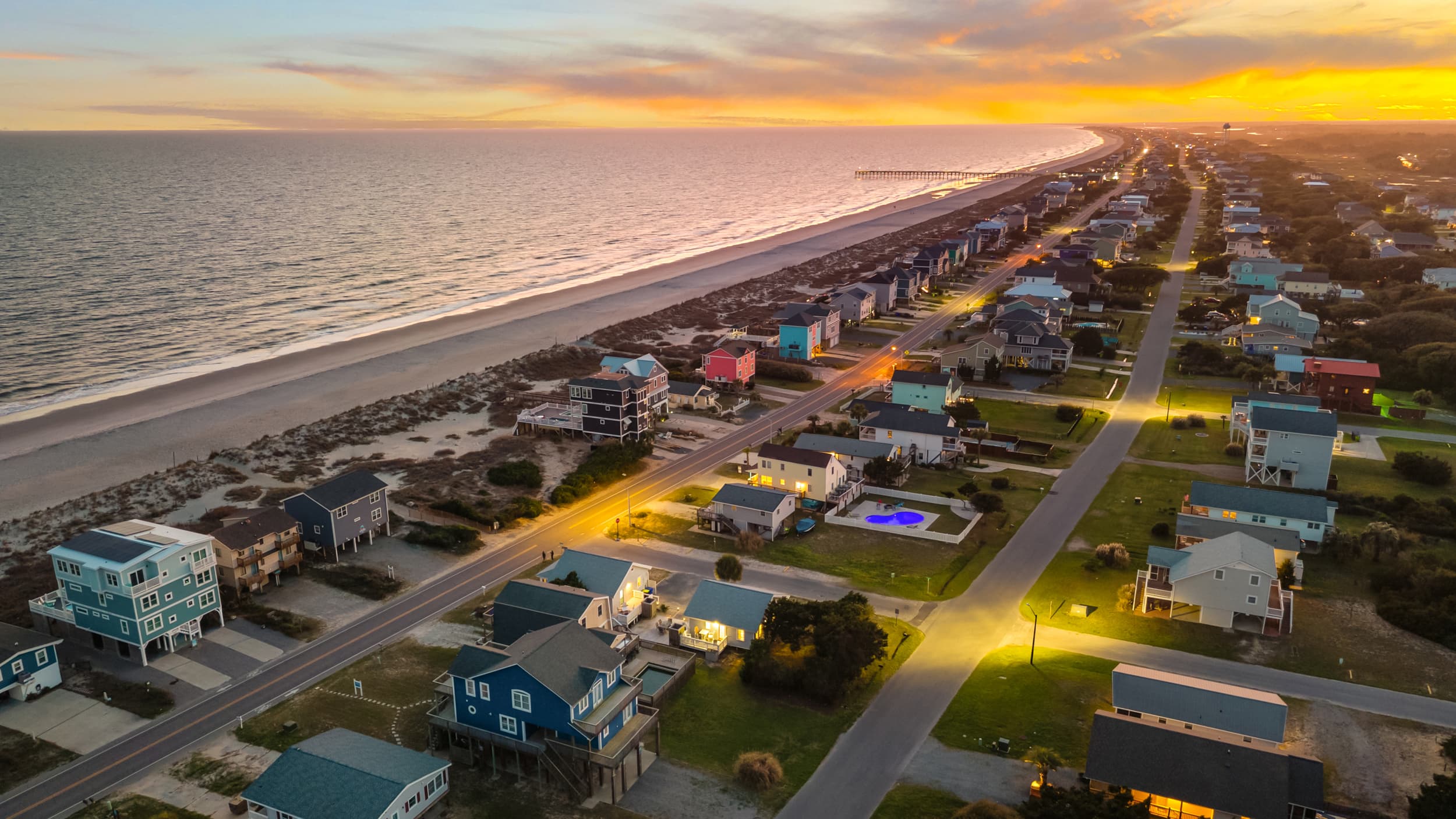
The Coastal Example: Consider a 5-bedroom oceanfront home in the Outer Banks priced at $1.2 million. The property generates $120,000 in annual gross revenue, suggesting a strong 10% gross yield. However, after accounting for property management (20%), utilities, maintenance, and property taxes, the NOI before insurance is approximately $65,000. Now add the insurance: a proper coastal policy with wind, flood, and commercial liability coverage could easily run $10,000 to $14,000 annually. The NOI drops to $51,000 to $55,000, representing a net cap rate of 4.25% to 4.6%—a very different picture than the initial 10% gross yield suggested.
The Mountain Example: A 3-bedroom cabin in Gatlinburg priced at $600,000 generating $65,000 in gross annual revenue. After expenses, the pre-insurance NOI is approximately $35,000. A commercial STR policy in the Smokies runs approximately $2,500 to $4,000 annually, leaving an NOI of $31,000 to $32,500 and a cap rate of 5.2% to 5.4%.
Trying to figure out which STR market actually fits your budget?
Book a Market Match call with Savvy and we'll help you narrow the field before you start chasing random listings.
Book a Market Match CallFinancing Lens: Insurance and DSCR Loans
Insurance is a critical component of the PITIA (Principal, Interest, Taxes, Insurance, and HOA) calculation used to determine your Debt Service Coverage Ratio (DSCR).
If you underestimate the cost of your commercial STR policy, and the actual premium comes in much higher, your monthly debt obligation increases. This lowers your DSCR ratio. If the ratio drops below the lender's required minimum (typically 1.0 to 1.25), your loan could be denied, or you may be required to put down a significantly larger down payment to make the numbers work.
STR financing is not one-size-fits-all. STR Home Loans helps investors compare lending options built around vacation rental investing, including DSCR loans, second-home loans, and investor-friendly loan strategies.
The STR Insurance Policy Review Checklist
Before closing on any short-term rental property, confirm the following policy parameters are met:
Property Coverage Checkpoints
✓ Policy covers the full replacement cost of the structure (not just market value).✓ Policy explicitly covers damage caused by short-term rental guests.
✓ Policy does not contain a restrictive "business activity" exclusion.
Liability Coverage Checkpoints
✓ Minimum $1,000,000 in commercial general liability coverage.✓ Coverage includes bodily injury and property damage claims caused to guests.
✓ Private pools, hot tubs, or other premium amenity risks are specifically covered.
Business Income Coverage Checkpoints
✓ Policy includes Loss of Business Income or Loss of Rents coverage.✓ Coverage period is sufficient to bridge major structural repair down-times (minimum 6 months).
Environmental Checkpoints (If Applicable)
✓ Flood insurance policy is active if the property is located in a high-risk flood zone.✓ Wind/hail underwriting policies are established if purchasing in coastal hurricane tracks.
✓ Wildfire zone risk coverage is explicitly outlined for mountain property assets.
Where Savvy Helps
A good STR deal is not just a pretty cabin with a revenue estimate. Savvy STR Agents helps investors pressure-test the market, revenue, regulations, financing, insurance, and resale story before they buy. We ensure you understand the true costs of operating in your chosen market, so you aren't blindsided by insurance premiums that destroy your cash flow.
Recommended Foundational Architecture Guides:
Frequently Asked Questions (FAQ)
Does standard homeowner's insurance cover Airbnb?
No. Standard homeowner (HO-3) and landlord (DP-3) policies explicitly exclude coverage for business activities, including short-term rentals. If you file a claim and the insurer discovers the property is an active Airbnb, the claim will be denied and your policy may be cancelled.
Is Airbnb AirCover enough insurance?
No. AirCover is a host damage protection program, not a primary insurance policy. It does not cover off-platform bookings, loss of business income, or many structural perils. It should be considered supplemental coverage only.
How much does short-term rental insurance cost?
Costs vary significantly based on location, property value, and environmental risks. A standard policy in a low-risk area might cost $1,500 to $3,500 annually, while coastal properties requiring wind and flood coverage can cost $6,000 to $15,000+ per year.
What is Loss of Business Income coverage?
If your property is damaged by a covered peril (like a fire) and cannot be rented while it is being repaired, Loss of Business Income coverage reimburses you for the rental revenue you lost during that period. This is essential for investors who rely on rental income to pay the mortgage.
Do I need an LLC to get commercial STR insurance?
No. You can purchase a commercial STR policy as an individual. However, operating your STR under an LLC provides an additional layer of personal liability protection and is highly recommended by most legal and financial advisors.
Will my DSCR lender require commercial STR insurance?
Yes. DSCR lenders require proof of adequate insurance before closing. They will verify that the policy covers the replacement cost of the home and includes sufficient liability and loss of rent coverage.
References:
[1] AirDNA. "Short-Term Rental Insurance Guide for Hosts." airdna.co/blog/short-term-rental-insurance-guide