Smoky Mountains vs. Outer Banks: Which STR Market is Better for Investors in 2026?
Deciding between a Gatlinburg cabin and an Outer Banks beach house? Compare 2026 STR data, ROI, seasonality, insurance, and risks for NC and TN markets.
For short-term rental (STR) investors focused on the Southeast and Mid-Atlantic, the decision often comes down to a fundamental choice: Beach or Mountain?
The two heavyweights in these categories are the Outer Banks of North Carolina (OBX) and the Smoky Mountains of Tennessee (Gatlinburg, Pigeon Forge, Sevierville). Both markets have decades of proven vacation rental history, massive tourism drivers, and well-established property management infrastructures. Both are drive-to destinations that proved remarkably resilient during the pandemic travel boom and continue to attract millions of visitors annually.
However, their revenue models, seasonality profiles, and risk structures are entirely different. A beach house and a mountain cabin are not interchangeable investments—they require different capital levels, different cash management strategies, and different risk tolerances. If you are deploying capital in 2026, you must align the market's specific dynamics with your personal investment strategy. This guide provides a data-driven comparison of both markets to help you make that decision.
Key Takeaways:
- The Smoky Mountains offer year-round, multi-season demand with a lower barrier to entry, but face increasing supply saturation that rewards premium properties.
- The Outer Banks generates massive top-line revenue compressed into a 16-week summer season, requiring investors to budget carefully for the winter.
- Coastal insurance costs in the Outer Banks significantly impact Net Operating Income (NOI) compared to mountain properties.
- Both markets are heavily reliant on drive-to tourism, making them resilient during broader economic shifts that affect air travel.
- The right market choice depends entirely on your capital liquidity thresholds, off-season cash discipline, and portfolio expansion timeline.
Trying to figure out which STR market actually fits your budget?
Book a Market Match call with Savvy and we'll help you narrow the field based on your specific goals and risk tolerance.
Book a Market Match CallThe Smoky Mountains (Gatlinburg/Pigeon Forge, TN)
The Smoky Mountains are the undisputed king of multi-season demand in the Southeast. Driven by the Great Smoky Mountains National Park (the most visited national park in the United States, with over 14 million visitors annually) and Dollywood, this market does not have a true "dead" season.
The Bull Case for the Smokies
The Smokies benefit from four distinct revenue periods, each driven by a different type of traveler: Spring Break (families and students), Summer (peak family travel), Fall Foliage in October (highest ADR period driven by leaf-peeping demand), and Winter Holidays (cabins for Thanksgiving and Christmas family gatherings). This consistent booking behavior provides investors with reliable cash flow throughout the year.
According to AirROI's 2026 dataset, the Pigeon Forge market averages $48,823 in annual revenue, a $359 ADR, and 43% occupancy across all listings. Top-quartile properties significantly outperform these averages, with the best-in-class properties (top 10%) achieving $10,106+ in monthly revenue and 80%+ occupancy. The barrier to entry is also lower than coastal markets; investors can still find performing 2-bedroom cabins in the $500,000 to $650,000 range.
The Bear Case for the Smokies
The secret has been out on the Smokies for years, and the market has seen significant supply growth. The market now explicitly rewards investors who purchase premium properties—cabins with spectacular mountain views, indoor pools, or high-end game rooms—to stand out from the competition. Generic, amenity-deficient cabins are increasingly struggling to maintain occupancy. Additionally, wildfire risk is a real concern. The 2016 Chimney Tops 2 Fire destroyed over 2,400 structures in Gatlinburg and serves as a reminder that wildfire coverage is critical.
The Outer Banks (Corolla/Nags Head, NC)
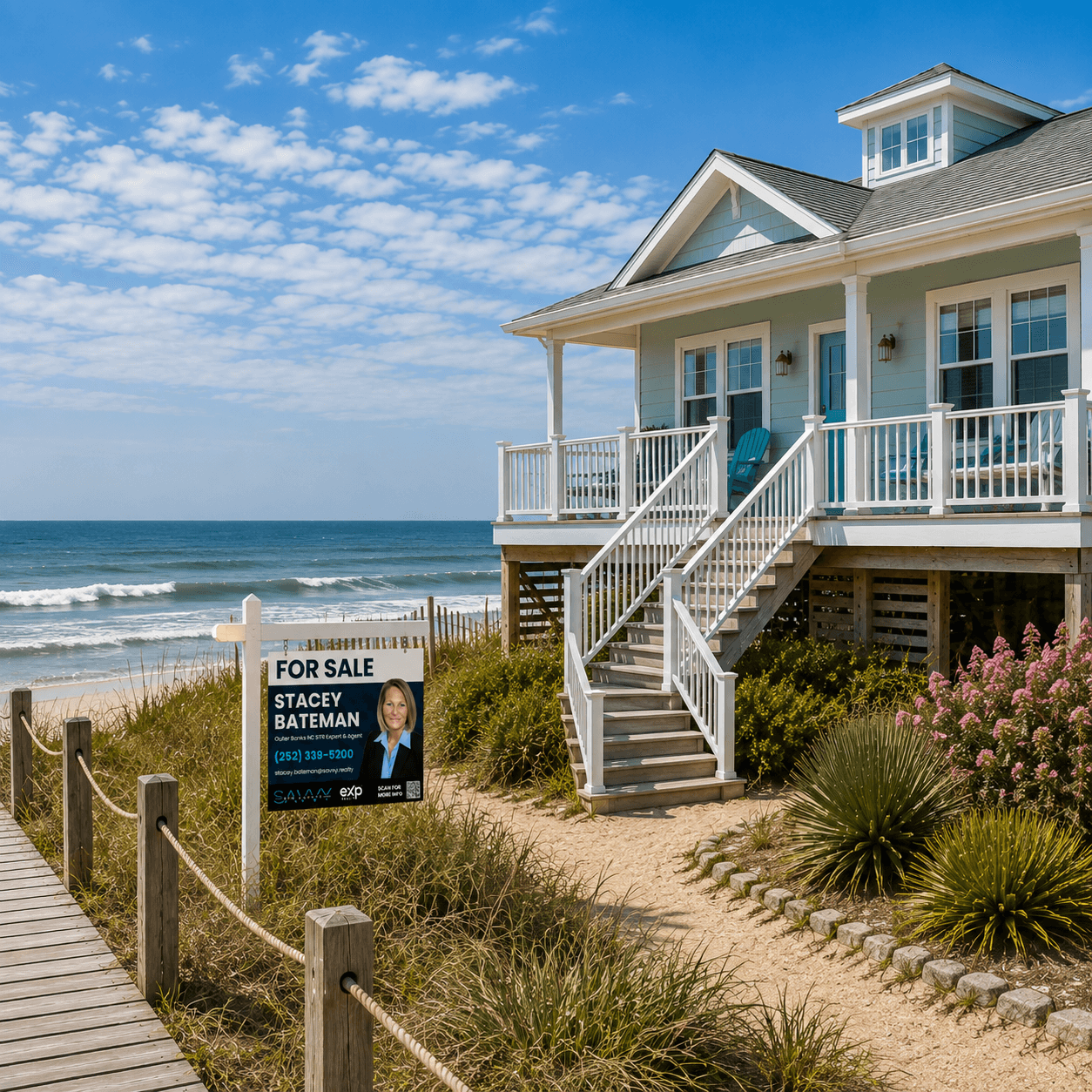
The Outer Banks (OBX) is the premier drive-to beach destination for the Mid-Atlantic and Southeast. Unlike Florida's condo-heavy markets, OBX is dominated by large, purpose-built single-family vacation homes designed to host multiple generations under one roof—the "family reunion" house.
The Bull Case for the Outer Banks
OBX commands some of the highest weekly rental rates in the country during the peak summer season. A 6-bedroom oceanfront home can easily generate $10,000 to $15,000+ per week from Memorial Day through Labor Day. The market benefits from a deeply entrenched family reunion culture, with the same groups booking the same homes for the same week year after year. This loyalty-driven demand structure creates unusually high guest retention rates—some property managers report 60% to 70% of bookings come from returning guests. Annual occupancy for oceanfront properties runs 60% to 72%, compressed into a 16-week summer season.
The Bear Case for the Outer Banks
Extreme seasonality is the defining challenge. OBX generates roughly 60% to 70% of its annual revenue in just 16 weeks. The winter months from November through March are extremely slow, with occupancy dropping to 15% to 25% for most properties. Investors must have the discipline to save the massive summer profits to cover the mortgage during lean winter cycles. Furthermore, coastal property and flood insurance premiums have risen sharply, easily totaling $8,000 to $14,000 annually for a large beach house, eating directly into the NOI.
Beach vs. Mountain STR Comparison Table
| Metric | Smoky Mountains (TN) | Outer Banks (NC) |
|---|---|---|
| Primary Demand Driver | National Park, Dollywood | Ocean/Beach, Family Reunions |
| Seasonality | Moderate (4 distinct seasons) | Extreme (Summer peak) |
| Annual Occupancy (Avg.) | 43% - 55% | 60% - 72% (Compressed) |
| Average Daily Rate (ADR) | $300 - $450 (by cabin size) | $500 - $1,200+ (by water proximity) |
| Barrier to Entry (Price) | Medium ($500k - $900k) | High ($800k - $2.5M+) |
| Regulatory Risk | Low (Purpose-built STR market) | Low (Established STR framework) |
| Primary Insurance Risk | Wildfire | Hurricane / Flood |
| Est. Annual Insurance Cost | $2,500 - $5,000 | $8,000 - $15,000+ |
| Year-Round Cash Flow? | Yes | No (Highly seasonal) |
Investor Lens: Cash Flow vs. Appreciation
When choosing between these two markets, consider your capital constraints and cash management discipline.
The Smoky Mountains Case Study: A 3-bedroom cabin with a mountain view and hot tub in Pigeon Forge, purchased for $750,000. Projected annual gross revenue: $72,000. After a 20% management fee ($14,400), utilities ($4,800), maintenance ($5,000), insurance ($3,500), and property taxes ($6,000), the NOI is approximately $38,300. With a 25% down payment ($187,500) and a DSCR loan at current rates, the monthly PITIA is approximately $4,800. Annual cash flow: approximately $900 (nearly break-even). However, the property is building equity and has strong appreciation potential in a market with limited land supply.
The Outer Banks Case Study: A 5-bedroom semi-oceanfront home in Nags Head, purchased for $1.2 million. Projected annual gross revenue: $130,000. After management (20% = $26,000), utilities ($7,200), maintenance ($8,000), insurance ($11,000), and property taxes ($9,000), the NOI is approximately $68,800. With a 25% down payment ($300,000) and a DSCR loan, the monthly PITIA is approximately $7,500. Annual cash flow: approximately negative $21,200 annually. This deal only works if you believe in the appreciation story and can fund the monthly shortfall from other income streams.
Ready to see real STR investment opportunities?
Explore Savvy's curated property page for short-term rental-friendly listings and agent-backed market insight.
Explore Savvy STR PropertiesFinancing & Insurance Lens
Financing a property in either market using a DSCR loan is highly viable, as both have proven, data-backed rental histories that lenders trust and understand.
The defining difference lies in insurance. When underwriting an OBX property, you must factor in expensive wind/hail policies and National Flood Insurance Program (NFIP) or private flood policies. These costs can easily exceed $8,000 to $14,000 annually for a large beach house. In the Smokies, while wildfire risk is a factor, standard commercial STR policies are generally much more affordable at $2,500 to $5,000 annually.
Insurance costs directly affect the PITIA calculation and therefore the DSCR ratio. An investor who underestimates OBX insurance costs by $500 per month will find their DSCR ratio significantly lower than projected, potentially requiring a larger down payment to qualify for the loan.
Before you close, make sure the property is actually insurable. STR Insurance Advisors can help investors evaluate coverage designed for guest use, liability, property risk, and income protection.
Who Should Buy in Each Market
Choose the Smoky Mountains if:
- You have $150,000 to $250,000 in liquid capital for a down payment and setup costs.
- You prefer steady, year-round cash flow over high-peak seasonal revenue.
- You want a lower-complexity, more passive investment profile.
- You are a first-time STR investor looking to learn the business without extreme seasonality risk.
Choose the Outer Banks if:
- You have $300,000 to $500,000+ in liquid asset environments.
- You have the financial discipline to manage highly seasonal cash flow and can fund the off-season.
- You believe in the long-term appreciation story for coastal North Carolina real estate.
- You want to own a premium, high-grossing asset that commands top-tier weekly rates.
Where Savvy Helps
A good STR deal is not just a pretty cabin with a revenue estimate. Savvy STR Agents helps investors pressure-test the market, revenue, regulations, financing, insurance, and resale story before they buy. Whether you prefer the steady rhythm of the mountains or the high-yield peaks of the coast, our agents have the local data to ensure you buy right.
Recommended Foundational Architecture Guides:
Frequently Asked Questions (FAQ)
Which market is better for a beginner investor?
The Smoky Mountains are generally better for beginners due to lower purchase entry points and more consistent year-round cash flow curves, reducing the immediate need for massive cash capital reserves.
Do I need flood insurance in the Outer Banks?
Yes. Almost all properties in the Outer Banks will require flood insurance if you are using a mortgage to finance the purchase. Properties in FEMA-designated flood zones are required to carry flood insurance, and most OBX properties fall into this category.
Are there STR regulations in the Smoky Mountains?
While the market is highly STR-friendly, certain municipalities (like Gatlinburg proper) have specific permitting and structural safety inspection requirements. Always verify local address zoning rules before purchasing.
What is the peak season in the Outer Banks?
The primary booking window runs for approximately 16 weeks, spanning Memorial Day weekend through Labor Day weekend. October can also show structural shoulder-season spikes.
What amenities matter most in the Smoky Mountains?
Clear mountain views, hot tubs, multi-tiered game rooms, private indoor pool additions, and close geometric proximity to Dollywood drive the highest performance margins.
References:
[1] The Short Term Shop. "Smoky Mountain Revenue Trends for 2026." theshorttermshop.com/smoky-mountain-revenue-trends-for-2026/
[2] Awning. "Best Places to Invest in Short-Term Rentals in Outer Banks, North Carolina." awning.com/post/best-places-invest-short-term-rental-outer-banks-north-carolina
[3] AirROI. "Pigeon Forge, Tennessee Airbnb Market Data 2026." airroi.com/airbnb-data/united-states/tennessee/pigeon-forge
[4] Facebook Groups. "Smoky mountains airbnb market is saturated." facebook.com/community-discussions-STR